
Uganda is celebrated for its breathtaking wildlife, spectacular landscapes, and unforgettable safari experiences. While mountain gorillas often steal the spotlight, another remarkable attraction awaits visitors in the southern sector of Queen Elizabeth National Park. the famous tree climbing lions of Ishasha. These extraordinary predators have fascinated wildlife enthusiasts, photographers, researchers, and safari travelers from around the world.
Unlike most lions that spend their time resting on the ground, the tree climbing lions of Ishasha frequently climb and lounge high in giant fig and acacia trees. Seeing a pride stretched comfortably across thick branches is one of Africa’s most unusual wildlife spectacles and remains a highlight of any Ugandan safari.
In this guide, you’ll discover where to see these incredible lions, why they climb trees, the best time to visit, photography tips, and how to maximize your chances of witnessing this rare natural phenomenon.
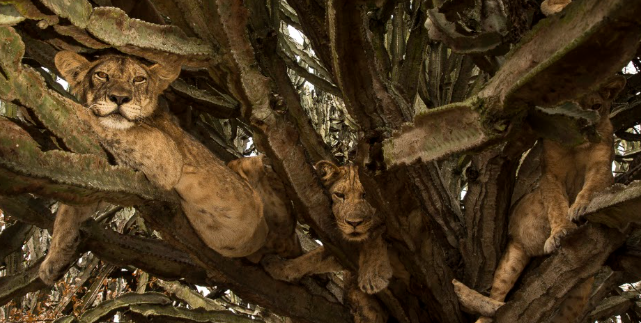
Lions are generally terrestrial animals, making tree climbing an uncommon behavior. Across Africa, only a handful of lion populations regularly climb trees, and Ishasha hosts one of the most famous groups.
The Ishasha sector offers a unique ecosystem where lions have adapted behaviors that continue to intrigue wildlife experts. Visitors often find entire prides including cubs, lionesses, and dominant males relaxing several meters above the ground.
This rare habit has transformed Ishasha into one of Uganda’s premier safari destinations, attracting wildlife lovers seeking experiences beyond traditional game drives.
The best place to observe tree climbing lions is the Ishasha sector, located in the southern region of Queen Elizabeth National Park.
This remote wilderness forms a natural corridor between Uganda and the Democratic Republic of Congo, offering stunning scenery characterized by:
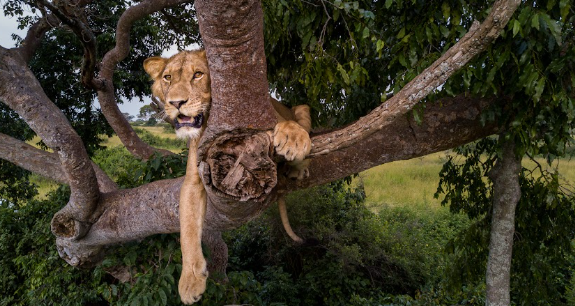
The large fig trees scattered throughout Ishasha provide perfect resting spots where lions can often be seen draped across thick branches during daylight hours.
Unlike the busier northern sections of the park, Ishasha offers a quieter safari experience with fewer vehicles, creating a more intimate wildlife encounter.
One of the biggest questions visitors ask is why these lions spend so much time in trees.
While scientists continue researching the behavior, several theories explain this fascinating adaptation.
Uganda’s tropical climate can become extremely warm during midday.
The elevated branches provide cooler temperatures and refreshing breezes, allowing lions to rest comfortably while conserving energy for nighttime hunting.
Ground-level insects such as biting flies and mosquitoes can become particularly bothersome during certain seasons.
Resting above the ground helps reduce constant irritation from these insects.
From high branches, lions enjoy panoramic views across the savannah.
This elevated position enables them to:
Large fig trees provide sturdy branches capable of supporting even fully grown male lions.
The branches offer peaceful resting places away from disturbances while still allowing the lions to descend quickly if prey appears nearby.
Although the tree climbing lions can be seen throughout the year, certain seasons significantly improve viewing opportunities.
This is widely considered the best safari season because:
Lions are frequently observed resting in trees during the hottest hours.
This period also offers excellent wildlife viewing.
Clear skies and comfortable temperatures make photography especially rewarding.
March to May and October to November bring lush landscapes and fewer visitors.
Although occasional rain may affect road conditions, the scenery becomes exceptionally green and beautiful.
Wildlife viewing remains rewarding with experienced guides.
Timing greatly influences your chances of success.
Morning game drives often reveal lions descending from trees after nighttime hunting activities.
As temperatures rise, lions commonly climb into the trees to rest.
This period offers the highest probability of seeing them stretched across branches.
Lions begin becoming active again before sunset, preparing for evening hunting.
The Ishasha sector supports a rich diversity of wildlife beyond its famous lions.
Visitors exploring the Ishasha sector frequently encounter an impressive variety of wildlife beyond the famous tree climbing lions. Large herds of African elephants and African buffalo roam the open savannah and woodlands, while graceful topi antelope, Uganda kob, and waterbuck are commonly seen grazing across the plains. Predators such as hyenas and the elusive leopard also inhabit the area, adding excitement to every game drive, while warthogs can often be spotted trotting through the grasslands with their distinctive tails held upright. This rich diversity of wildlife makes every safari in Ishasha a rewarding and unforgettable experience.
Bird enthusiasts can also enjoy exceptional birdwatching, with numerous raptors, kingfishers, hornbills, bee-eaters, and storks inhabiting the area.
The combination of diverse wildlife and tranquil landscapes makes Ishasha one of Uganda’s most rewarding safari destinations.
Photographing tree climbing lions requires patience and proper preparation.
A lens between 200mm and 400mm allows close-up images while maintaining a respectful distance.
Although resting lions appear still, sudden movements can happen quickly.
Fast shutter speeds help maintain image sharpness.
Early morning and late afternoon provide warm golden lighting that enhances wildlife photography.
Harsh midday sunlight may create strong shadows beneath tree branches.
Rather than focusing solely on close-up portraits, capture wider compositions showing lions resting within enormous fig trees.
These images tell a richer story of the Ishasha environment.
Sometimes lions remain hidden among dense foliage.
Allow your guide enough time to carefully scan the trees before moving on.
Patience often results in unforgettable sightings.
The famous tree climbing lions represent an important part of Uganda’s wildlife heritage.
Several conservation initiatives help protect them, including:
Wildlife authorities regularly monitor the park to reduce illegal hunting and protect predator populations.
Local communities increasingly benefit from tourism through employment and conservation partnerships.
When surrounding communities benefit economically, support for wildlife protection grows stronger.
Visitors contribute directly to conservation by paying park entrance fees and choosing ethical safari operators.
These funds support wildlife monitoring, habitat protection, ranger training, and community development.
One of Uganda’s greatest safari advantages is the opportunity to combine multiple iconic experiences within one journey.
Many travelers include Ishasha between:
This combination creates one of Africa’s most diverse wildlife adventures.
To maximize your experience, consider these practical recommendations.
Professional safari guides understand lion behavior and know the areas where prides are frequently located.
Lodges within or close to Ishasha reduce travel time and increase opportunities for morning and evening game drives.
Neutral-colored clothing blends naturally into the environment.
Bring:
Even when lions are visible in trees, binoculars reveal fascinating details of their behavior.
Maintain safe viewing distances and avoid making loud noises.
Responsible wildlife viewing minimizes stress on animals while enhancing the experience for everyone.
While many African parks offer excellent lion sightings, few provide the opportunity to watch lions resting comfortably above the ground.
These characteristics make the Ishasha sector one of East Africa’s hidden safari gems.
No. Similar populations exist in northern Tanzania, particularly around Lake Manyara. However, Uganda’s Ishasha sector remains one of the world’s most reliable places to observe this remarkable behavior.
Wildlife sightings can never be guaranteed because animals move freely. However, experienced guides and well-planned game drives greatly improve your chances.
Yes. Although climbing requires effort, these lions have developed the skill over generations and move surprisingly confidently among sturdy branches.
How long should I spend in Ishasha?
A minimum of one night is recommended. Spending two nights provides additional game drives and significantly increases the likelihood of memorable sightings.
Few wildlife experiences compare to watching the famous tree climbing lions resting gracefully among the towering fig trees of Uganda’s Ishasha sector. Their unusual behavior, combined with the breathtaking scenery of Queen Elizabeth National Park, creates an unforgettable safari adventure that stands apart from traditional wildlife experiences.
Whether you’re a passionate wildlife photographer, a first-time safari traveler, or an experienced explorer seeking something extraordinary, Ishasha offers one of Africa’s most captivating spectacles. Pair your visit with gorilla trekking in Bwindi, boat cruises along the Kazinga Channel, or chimpanzee tracking in Kyambura Gorge, and you’ll enjoy one of the continent’s most diverse safari itineraries.
Contact Haven Expeditions when planning a Ugandan safari, don’t miss the chance to witness the remarkable tree climbing lions in their natural habitat. With the right timing, an experienced guide, and a little patience, you’ll leave Ishasha with unforgettable memories and a deeper appreciation for one of nature’s most fascinating wildlife behaviors.

Ready to explore the wild beauty of Africa? Tell us your travel interests below and our safari experts will respond to provided email within 2 minutes & absolutely free.


