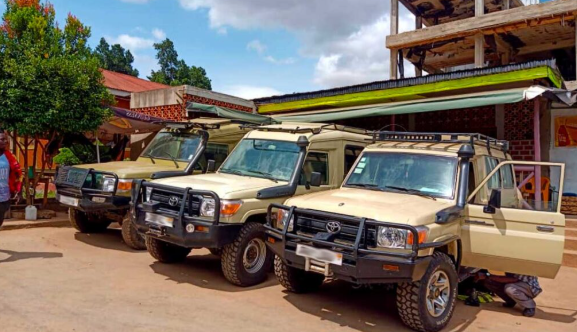
Planning a safari in Uganda involves making several important decisions, from selecting the right national parks to choosing the best time to travel. One of the most overlooked yet essential decisions is your safari vehicle choice. The vehicle you travel in directly affects your comfort, safety, photography opportunities, and overall safari experience, especially when exploring Uganda’s diverse landscapes that range from mountain forests to remote savannah plains.
Uganda’s national parks present varying road conditions. While some routes are relatively well-maintained, many game tracks become muddy, rocky, and uneven, particularly during the rainy seasons. Your safari vehicle choice can therefore determine whether your journey is smooth and enjoyable or unnecessarily challenging.
The two most common safari vehicles used throughout Uganda are the 4×4 Land Cruiser and the safari van, often referred to as a Toyota Hiace safari van.
This guide compares these two safari vehicles in detail, helping you make an informed decision before booking your Uganda safari.
Understanding Your Safari Vehicle Choice Before Booking
Before comparing the vehicles themselves, it is important to understand why your safari vehicle choice matters. Unlike ordinary road trips, safaris involve long hours on gravel roads, national park tracks, river crossings, steep mountain roads, and occasionally slippery terrain after rainfall.
Comfort becomes increasingly important during drives that may last six to eight hours between destinations. A reliable vehicle also minimizes delays caused by difficult road conditions, allowing you to maximize your wildlife viewing time.
Your chosen vehicle also influences how easily you can observe wildlife. Elevated seating positions, large viewing windows, and pop-up roofs all contribute to a better safari experience, particularly for photography enthusiasts.
The right vehicle complements the type of safari you are planning rather than simply serving as transportation.
Why the 4×4 Land Cruiser Is a Popular Safari Vehicle Choice
The Toyota Land Cruiser has earned its reputation as Africa’s premier safari vehicle for good reason. Built specifically to handle challenging terrain, it is the preferred option for luxury safaris, wildlife expeditions, and remote conservation areas throughout Uganda.
Most safari Land Cruisers are modified with custom interiors featuring individual window seats, charging ports, refrigerated compartments, and large pop-up roofs that allow guests to stand comfortably while viewing wildlife.
One of the greatest advantages of this safari vehicle choice is its exceptional off-road capability. Four-wheel drive enables the vehicle to navigate muddy roads, steep hills, rocky tracks, and waterlogged park routes that might prove difficult for ordinary vehicles.
This reliability becomes especially valuable during Uganda’s rainy seasons when roads inside parks such as Queen Elizabeth National Park, Murchison Falls National Park, and Kidepo Valley National Park can become challenging.
The Land Cruiser’s elevated suspension also provides greater ground clearance, reducing the likelihood of getting stuck while ensuring passengers enjoy better visibility across the surrounding landscape.
Safari Van as a Budget-Friendly Safari Vehicle Choice
For travelers seeking affordability without sacrificing comfort, the safari van remains an excellent alternative. The Toyota Hiace safari van has become one of Uganda’s most commonly used safari vehicles, particularly for group tours and budget safaris.
These vans are specially modified for tourism, usually featuring a pop-up roof, spacious seating, and large windows designed for wildlife viewing.
A safari van performs exceptionally well on paved highways and relatively good gravel roads. Destinations such as Lake Mburo National Park, Ziwa Rhino Sanctuary, and many cultural attractions are comfortably accessible using this type of vehicle.
For travelers whose itinerary focuses primarily on wildlife viewing along established park roads, a safari van offers a comfortable experience at a considerably lower cost than a Land Cruiser.
Many tour companies also appreciate the van’s fuel efficiency, which helps reduce the overall safari package price.
Comparing Comfort as a Safari Vehicle Choice
Comfort is one of the most important considerations during extended safari drives. Uganda’s attractions are spread across the country, and visitors often spend several hours traveling between destinations.
The Land Cruiser generally offers more spacious seating, particularly for smaller groups. Individual seats provide greater personal space, while the suspension system absorbs bumps more effectively on rough roads.
Passengers also benefit from improved legroom, allowing them to remain comfortable during full-day game drives.
Safari vans provide comfortable seating as well, particularly for families and larger groups. Modern safari vans are fitted with reclining seats and ample luggage space, making them practical for extended tours.
How Safari Vehicle Choice Affects Wildlife Viewing
Wildlife viewing opportunities vary considerably depending on your safari vehicle choice.
The Land Cruiser’s higher seating position allows guests to see over tall grasses, bushes, and uneven terrain. This elevated perspective becomes particularly valuable when searching for lions resting in grasslands or elephants feeding among vegetation.
The larger pop-up roof also accommodates photographers comfortably, allowing multiple passengers to observe wildlife simultaneously without obstructing one another.
Safari vans also feature pop-up roofs that offer excellent viewing opportunities. On open plains and established game tracks, passengers enjoy impressive panoramic views of the surrounding environment.
The primary limitation appears in rougher terrain where the vehicle’s lower height may reduce visibility in certain areas.
For general game viewing, however, safari vans remain highly capable and continue to deliver memorable wildlife encounters.
Safari Vehicle Choice for Gorilla Trekking Adventures
One of Uganda’s biggest attractions is mountain gorilla trekking in Bwindi Impenetrable National Park and Mgahinga Gorilla National Park.
These destinations involve mountain roads that are often steep, narrow, and muddy, especially during rainy months.
For gorilla trekking itineraries, many experienced safari operators strongly recommend a Land Cruiser. Its four-wheel-drive capability provides greater confidence when climbing mountainous roads and navigating challenging sections that may become slippery after rainfall.
Travelers using safari vans can still reach gorilla trekking destinations successfully during much of the year. However, difficult weather conditions occasionally require additional assistance or alternative transportation arrangements.
If gorilla trekking forms the centerpiece of your itinerary, choosing a Land Cruiser generally offers greater peace of mind.
Safari Vehicle Choice During Uganda’s Rainy Season
Uganda experiences two primary rainy seasons, typically from March to May and September to November. During these months, many national park roads become muddy and deeply rutted.
This is where your safari vehicle choice becomes particularly important.
Land Cruisers excel under wet conditions because of their superior traction, locking differentials, and high ground clearance. They can safely continue game drives even when road conditions deteriorate.
Safari vans perform adequately on well-maintained roads but may struggle on particularly muddy tracks. Responsible guides usually avoid risky areas, yet some wildlife viewing routes may become temporarily inaccessible.
Travelers planning safaris during wetter months often find the additional investment in a Land Cruiser worthwhile.
Fuel Efficiency and Cost Considerations in Safari Vehicle Choice
Budget naturally plays an important role when selecting a safari vehicle.
Safari vans generally cost less to operate because they consume less fuel and have lower maintenance expenses. These savings are usually reflected in the overall safari package, making them an attractive option for students, families, and larger travel groups.
Land Cruisers involve higher operating costs due to increased fuel consumption, specialized maintenance, and premium equipment. Consequently, safari packages using Land Cruisers are often more expensive.
However, many travelers consider the additional cost justified by the improved comfort, reliability, and off-road capability, particularly during longer expeditions.
Rather than viewing one vehicle as universally better, it is more accurate to match your safari vehicle choice with your travel priorities and budget.
Which Safari Vehicle Choice Is Better for Photography?
Photography enthusiasts often prioritize visibility, stability, and flexibility when choosing a safari vehicle.
Land Cruisers typically provide better photographic opportunities because of their elevated position, larger roof openings, and greater maneuverability. Guides can often reposition the vehicle more easily on narrow game tracks, allowing photographers to achieve better angles.
Professional wildlife photographers, however, generally prefer Land Cruisers for extended photographic expeditions.
Safety Considerations When Making Your Safari Vehicle Choice
Safety extends beyond seatbelts and mechanical reliability. It also includes vehicle stability, handling, and performance under varying road conditions.
Land Cruisers are specifically engineered for demanding environments and have earned a strong reputation for durability throughout Africa. Their robust construction provides confidence when traveling through remote conservation areas where roadside assistance may be unavailable.
Safari vans are also dependable when properly maintained by reputable safari companies. Experienced drivers understand the limitations of each vehicle and adjust driving techniques accordingly.
Regardless of your safari vehicle choice, selecting a professional tour operator that maintains its fleet regularly is equally important.
Choosing the Right Safari Vehicle Choice for Your Travel Style
Every traveler has unique priorities, making the ideal vehicle different for each safari.
Luxury travelers seeking maximum comfort, photographers requiring the best wildlife viewing positions, and visitors planning gorillatrekking or remote national park adventures often benefit most from choosing a Land Cruiser.
Families, student groups, budget travelers, and visitors following established tourism circuits frequently find safari vans to be practical, comfortable, and cost-effective.
Many travelers are pleasantly surprised by how enjoyable modern safari vans have become, particularly when operated by experienced guides who understand Uganda’s parks and wildlife.
Ultimately, your itinerary should guide your decision more than assumptions about either vehicle.
Right Safari Vehicle Choice for Your Travel Style in Summary
Choosing between a 4×4 Land Cruiser and a safari van is one of the most important decisions you’ll make when planning a Ugandan safari. Your safari vehicle choice influences everything from comfort and accessibility to wildlife viewing and overall travel costs.
The Land Cruiser stands out for its exceptional off-road capability, superior comfort, reliability in challenging conditions, and outstanding wildlife viewing opportunities.
Remember to contact Haven Expeditions for affordable safari vans that offers remarkable value for money. The vans provides comfortable transportation, excellent visibility through its pop-up roof, and dependable performance on most safari routes while keeping travel costs affordable.