
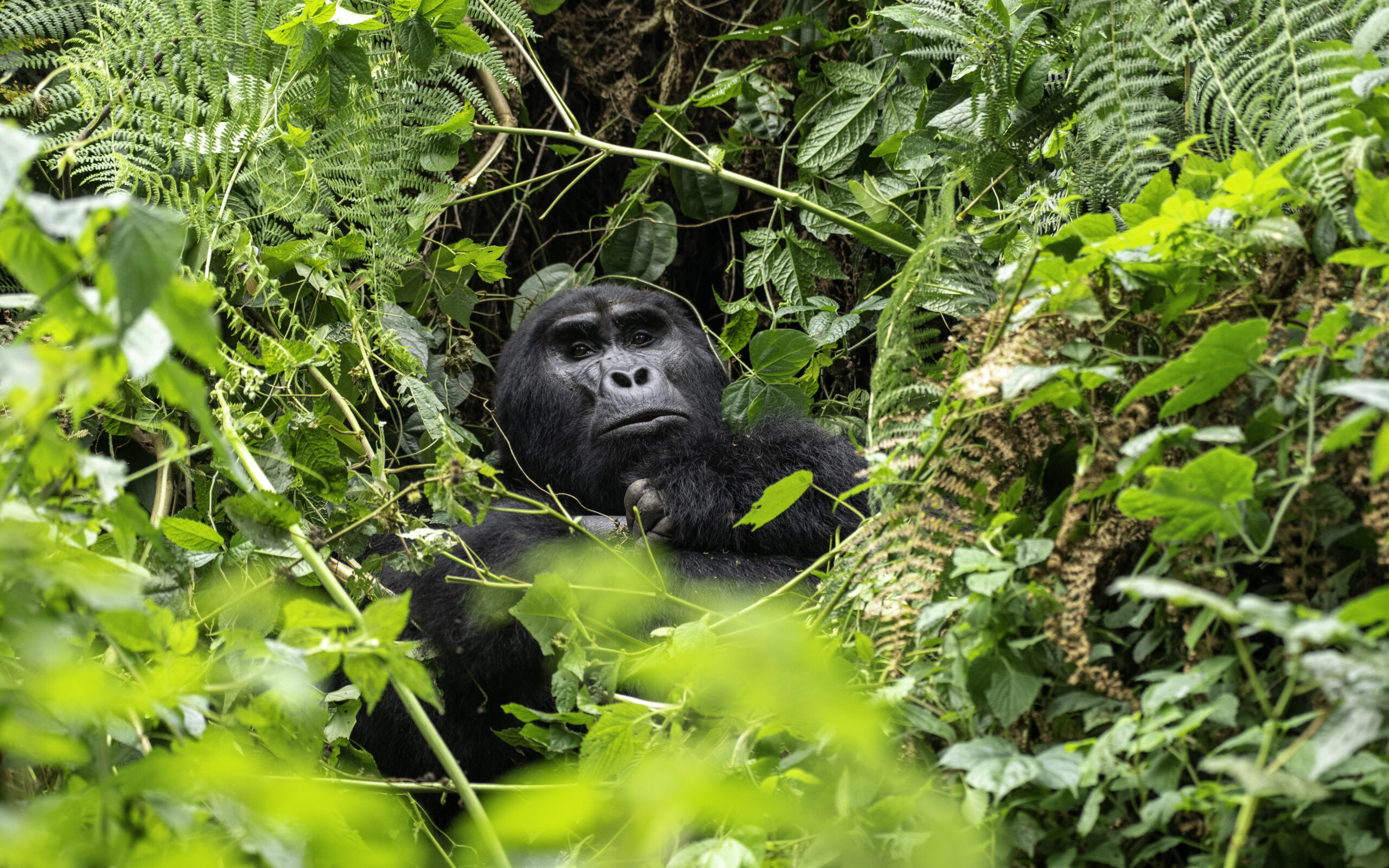
If there is one item that deserves a permanent spot at the top of every traveler’s bucket list, it is standing just meters away from a 400-pound silverback in the middle of a misty rainforest. It is an experience that defies words, a primal, soul-stirring encounter that stays with you long after the mud has been washed off your hiking boots. But as you begin planning, you’ll quickly face the ultimate East African dilemma: Where Should you trek in Rwanda vs Uganda
Rwanda Uganda gorillas offer a 98% success rate in finding the gorillas, but the “vibe,” the cost, and the logistics couldn’t be more different. Having helped countless adventurers navigate this choice, I’ve broken down everything you need to know for the 2026 season .
| Feature | Rwanda (Volcanoes National Park) | Uganda (Bwindi & Mgahinga) |
| Permit Price (2026) | $1,500 USD | $1000 USD |
| Drive Time (from Airport) | 2.5 – 3 Hours (Kigali) | 8 – 10 Hours (Entebbe) |
| Trekking Terrain | Open bamboo forests, volcanic slopes | Dense, tangled “impenetrable” jungle |
| Difficulty Level | Generally Moderate | Moderate to Strenuous |
| Luxury Level | Ultra-Luxury (The “Switzerland of Africa”) | Authentic, Boutique, & Mid-Range |
| Best For | Time-sensitive & luxury travelers | Adventurers & value-seekers |
The most immediate difference is the price of the permit.
Rwanda has firmly positioned itself as a high-end, low-impact destination. Their $1,500 permit fee is the highest in the world, a deliberate move to fund intensive conservation and high-spec infrastructure. If you are looking for the “Red Carpet” of safari experiences—complete with private butlers and world-renowned lodges like Singita Kwitonda, Rwanda is your place.
Uganda, on the other hand, offers incredible value. At $800 per permit, it is nearly half the price of Rwanda. This price gap allows many travelers to book two treks for nearly the same price as one in Rwanda, or to extend their stay to see chimpanzees and tree-climbing lions.
How much time do you have? This is often the deciding factor.
Rwanda is the King of Convenience. You can land in Kigali, drive three hours on perfectly paved roads, trek the next morning, and be back at the airport by evening. It’s the perfect “add-on” to a wider East African safari.
Uganda is an Epic Journey. Bwindi Impenetrable Forest is a solid 9-hour drive from Entebbe. While the drive is beautiful—earning Uganda the nickname “The Pearl of Africa”—it requires a more flexible schedule.
3. The Trekking Experience: Bamboo vs. Jungle
While the gorillas look the same, their “homes” do not.
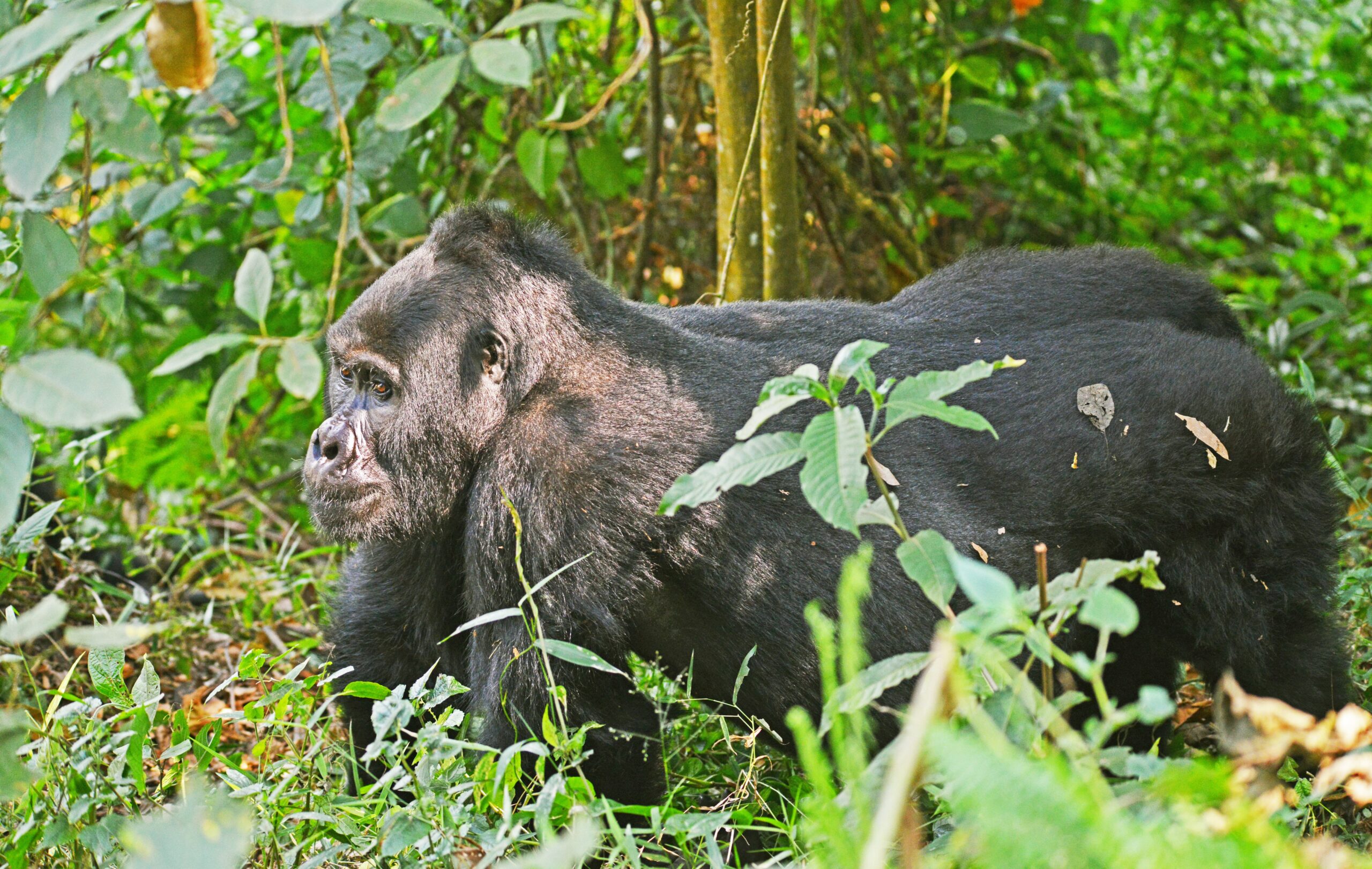
Trekking in Volcanoes National Park takes place on the slopes of the Virunga Mountains. The vegetation is dominated by bamboo forests, which are relatively open. This makes for easier hiking and, crucially, better photography. There is more light, and the gorillas are often easier to see without branches blocking your shot.
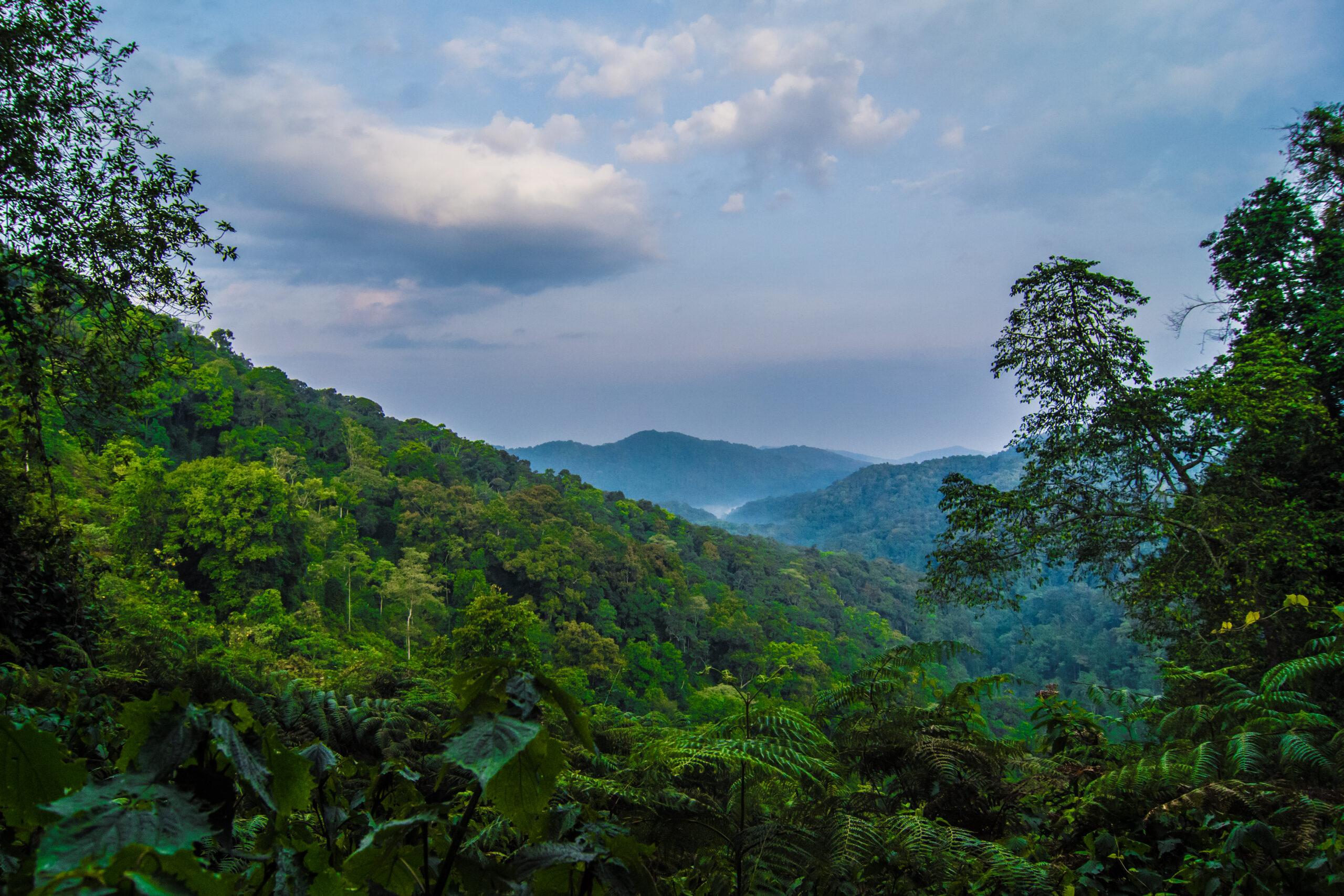
The name “Bwindi Impenetrable Forest” is not a marketing gimmick. It is an ancient, thick, and tangled rainforest. You will likely be hiking through dense undergrowth, and the terrain is often steeper and muddier. It feels like a true expedition. If you want to feel like an explorer discovering a hidden world, Uganda’s raw atmosphere is unbeatable.
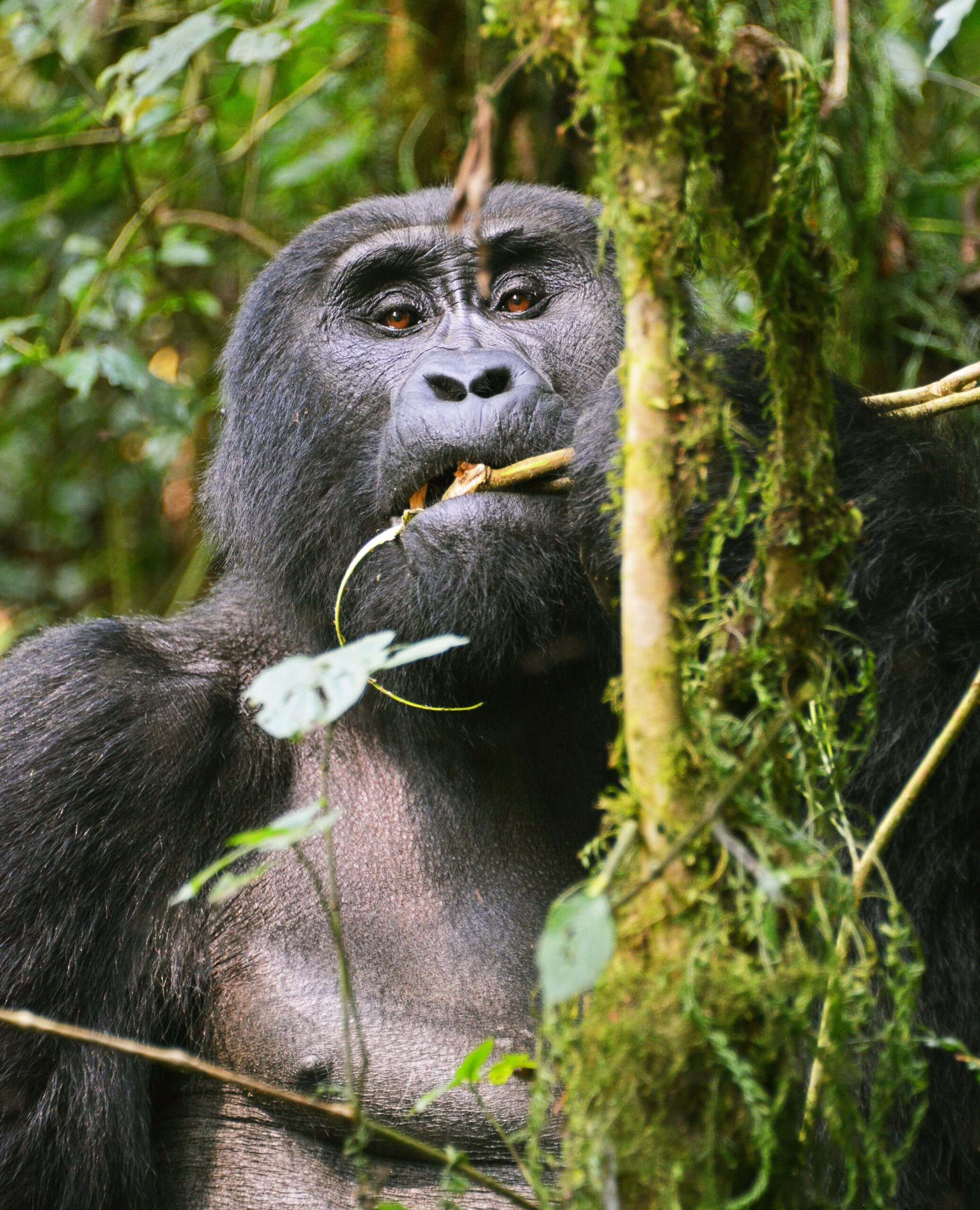
If one hour with the gorillas isn’t enough, Uganda offers something Rwanda does not: the Gorilla Habituation Experience.
For $1,500 (the same price as a standard 1-hour trek in Rwanda), you can spend four hours with a semi-habituated family in the southern sector of Bwindi. You’ll accompany researchers and trackers as they teach the gorillas to be comfortable around humans. It is a deep-dive into primatology and a favorite for serious photographers.
Both countries have two dry seasons:
June to September: The “Grand Prize” months. Best weather, but permits sell out 6+ months in advance.
December to February: The short dry season. Excellent trekking conditions.
Should you go in the rainy season (March–May)? If you’re on a budget, yes! While the trails are slippery, some lodges offer “low season” discounts. Just bring high-quality waterproof gear and a sense of humor for the mud.
Choose Rwanda if:
You are short on time (under 4 days).
You want the highest level of luxury and “polished” service.
You prefer a less strenuous hike with better photographic lighting.
Choose Uganda if:
You are looking for the best value for your money.
You want a longer, more diverse safari (chimps, lions, and gorillas).
You enjoy a rugged, adventurous “Indiana Jones” style trek.
Regardless of which side of the border you choose, remember that your permit fee is a direct contribution to the survival of this species. In the 1980s, there were only 250 mountain gorillas left; today, thanks to tourism, there are over 1,000.
Are you ready to meet the giants?
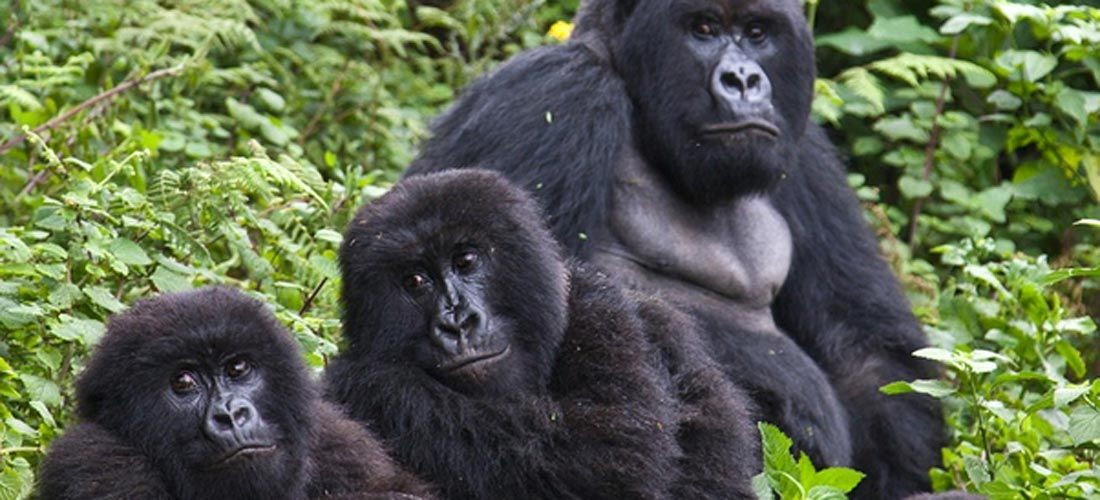
When choosing between these two nations, it is worth looking at what happens after the trekking is done. Most travelers don’t fly to East Africa just for a single hour with primates; they want a holistic African safari.
Rwanda’s small size is its greatest asset. In a single week, you can hit the “Big Three” of Rwandan tourism:
Akagera National Park: A stunning comeback story for conservation, where you can now see the Big Five (lion, leopard, rhino, elephant, and buffalo) in a savannah setting.
Nyungwe Forest: One of the oldest rainforests in Africa, famous for its Canopy Walk and chimpanzee trekking.
Lake Kivu: A massive inland sea perfect for “chilling out” post-trek, with no crocodiles or hippos, making it safe for swimming and kayaking.
Uganda is significantly larger and offers a wider variety of ecosystems. If you have 10–14 days, Uganda provides an odyssey that is hard to match:
Queen Elizabeth National Park: Famous for the Ishasha sector, where lions actually climb trees to nap in the branches—a phenomenon rarely seen elsewhere.
Kibale Forest: Widely considered the Primate Capital of the World, Kibale has the highest density of chimpanzees on the continent. The habituation success rate here is nearly 100%.
Murchison Falls: Here, the mighty Nile River is squeezed through a 7-meter gap, creating the world’s most powerful waterfall. It is a spectacular spot for boat safaris and seeing massive Nile crocodiles.
A blog post about East Africa would be incomplete without mentioning the warmth of the people. Both countries offer distinct cultural encounters that add depth to your itinerary.
In Rwanda, the focus is often on the country’s incredible journey of resilience and unity. A visit to the Kigali Genocide Memorial is a sobering but essential experience for understanding the modern Rwandan spirit. You can also visit the Iby’Iwacu Cultural Village near Volcanoes National Park, where former poachers have been transformed into conservationists and cultural performers.
In Uganda, the culture is incredibly diverse, with over 50 different tribes. Near Bwindi, you can meet the Batwa Pygmies, the original “Keepers of the Forest.” They were relocated when the parks were created, and their cultural trails offer a fascinating (and vital) look at how humans lived in harmony with the forest for millennia. Their ancient fire-making techniques and herbal medicine knowledge are truly mesmerizing.
Regardless of which country you pick, the “Gorilla Uniform” remains the same. Do not underestimate the terrain, the “Impenetrable” forest and the “Volcanoes” get their names for a reason.
Gardening Gloves: This sounds odd until you realize you’ll be grabbing onto stinging nettles and thorny vines to pull yourself up steep ridges.
Gaiters and Long Socks: Tuck your trousers into your socks. It looks dorky, but it prevents “safari ants” from climbing up your legs.
Waterproof Everything: Even in the dry season, these are rainforests. Clouds can roll in at any moment.
Hiring a Porter: This is the best $20 you will ever spend. Not only do they carry your heavy camera gear and pull you up the slippery bits, but you are also providing a direct livelihood for a local community member.
As of 2026, both Rwanda and Uganda remain among the safest travel destinations in Africa. Both governments take the protection of tourists and gorillas extremely seriously. You will be accompanied by armed park rangers on every trek—not because of “danger” from humans, but to ensure the safety of both the tourists and the wildlife from forest buffalo or elephants.
The roads in Rwanda are smoother and the cities are exceptionally clean (plastic bags are banned!), giving it a very modern, organized feel. Uganda feels more “raw” and bustling, with a chaotic charm that seasoned travelers often fall in love with.
If your heart is set on the most comfortable, efficient, and high-end experience, Rwanda is your winner. It is the “Porsche” of trekking destinations.
If your heart craves a longer, deeper exploration of the African wilderness and you don’t mind a few bumps in the road to save a few thousand dollars, Uganda will reward you with its soul.
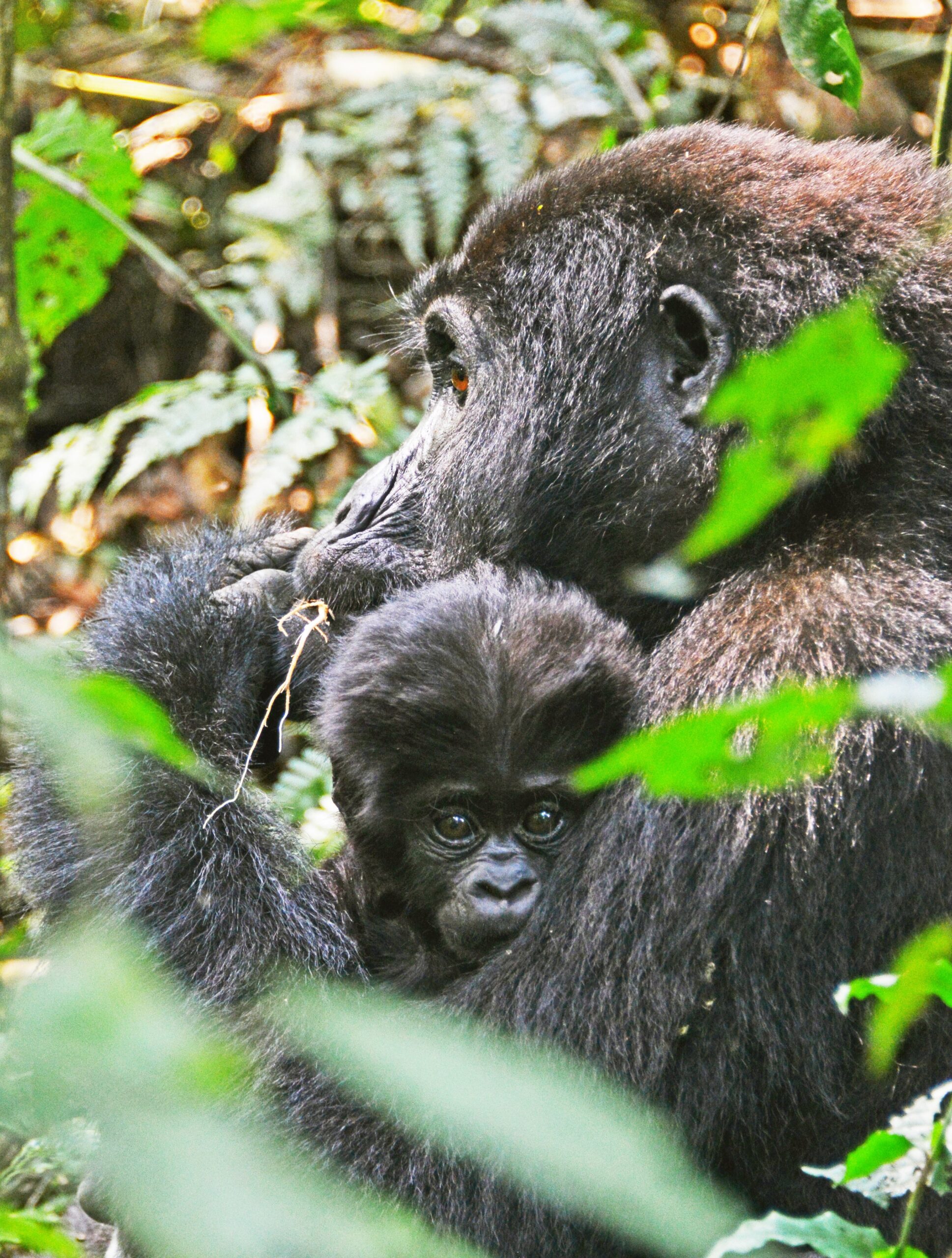
Ultimately, the gorillas don’t know which country they are in. They cross the border freely between Rwanda, Uganda, and the DRC. Whichever side you stand on, when you finally lock eyes with a Silverback, the borders, the price of the permit, and the mud on your boots will all fade into insignificance.

Ready to explore the wild beauty of Africa? Tell us your travel interests below and our safari experts will respond to provided email within 2 minutes & absolutely free.


