
A bird watching safari in Uganda is one of the most rewarding wildlife experiences in Africa. Often referred to as the “Pearl of Africa,” Uganda boasts an incredible diversity of habitats, ranging from tropical rainforests and montane forests to vast wetlands, savannah grasslands, and freshwater lakes. This remarkable ecological variety supports over 1,090 recorded bird species, representing nearly half of Africa’s bird population and about 11% of the world’s bird species.
Whether you are an experienced birder hoping to add rare species to your life list or a first-time visitor looking to combine birding with gorilla trekking and traditional game viewing, Uganda offers unforgettable opportunities. Every region presents unique birdlife, and every safari reveals colorful, melodious, and sometimes elusive species that make the country a paradise for nature enthusiasts.
In this guide, we explore why Uganda is a premier birding destination, the top species to look for, the best national parks for birding, and practical tips for planning the perfect bird watching safari.

Uganda’s exceptional biodiversity makes it one of Africa’s finest birding destinations. The country’s compact size allows visitors to experience multiple ecosystems within relatively short driving distances, making it possible to observe hundreds of bird species during a single itinerary.
Birders are particularly attracted to Uganda because of its impressive mix of East African savannah birds, Central African rainforest species, Albertine Rift endemics, migratory birds, and globally threatened species. Unlike many birding destinations that specialize in only one habitat, Uganda offers exceptional diversity in every region.
Another major advantage is that birding can easily be combined with gorilla trekking, chimpanzee tracking, game drives, boat cruises, cultural encounters, and mountain hiking, creating a comprehensive wildlife adventure unlike anywhere else in Africa.
No bird watching safari in Uganda is complete without searching for the legendary Shoebill Stork. Instantly recognizable by its enormous shoe-shaped bill, prehistoric appearance, and towering height, the Shoebill is considered one of Africa’s most sought-after birds.
Uganda offers some of the world’s best opportunities to observe this rare species in its natural habitat. Shoebills prefer papyrus wetlands, quietly standing motionless for long periods while waiting to ambush lungfish and other aquatic prey.
The Mabamba Swamp near Entebbe remains one of the most reliable locations for close encounters, although sightings are also possible in Murchison Falls National Park and other extensive wetlands.
Among Uganda’s rarest birds is the African Green Broadbill, an Albertine Rift endemic that inhabits the dense forests of Bwindi Impenetrable National Park.
Its brilliant green plumage blends perfectly with the forest canopy, making sightings both challenging and rewarding. Birders from around the world visit Uganda specifically to search for this elusive species.
One of the country’s most spectacular forest birds is the Great Blue Turaco. With vibrant blue feathers, yellow facial markings, and crimson wing patches visible during flight, this striking bird is frequently seen gliding gracefully through Uganda’s rainforests.
Kibale Forest, Bwindi, and Semuliki National Park all offer excellent opportunities for observation.
Uganda’s national bird, the Grey Crowned Crane, is admired for its elegant golden crown of stiff feathers, graceful movements, and elaborate courtship dances.
These beautiful cranes inhabit wetlands and grasslands throughout the country and are often seen in pairs or small family groups.
Known for its unmistakable call that symbolizes the African wilderness, the African Fish Eagle is commonly found around Uganda’s lakes and rivers.
Visitors on boat safaris in Murchison Falls National Park, Queen Elizabeth National Park, and Lake Mburo National Park frequently observe these majestic raptors perched on riverside trees before swooping down to catch fish.
The Saddle-billed Stork is another impressive wetland species characterized by its enormous red, yellow, and black bill. Standing nearly five feet tall, it is among Africa’s largest and most elegant wading birds.
These birds are regularly encountered in Uganda’s floodplains and marshes.
Nicknamed the “Jesus Bird” because it appears to walk on water, the African Jacana uses its unusually long toes to distribute its weight across floating vegetation.
Its chestnut body, bright blue forehead shield, and graceful movements make it a favorite among wildlife photographers.
This large forest hornbill is instantly recognizable by its distinctive casque and loud calls echoing through the rainforest canopy.
It plays an important ecological role by dispersing seeds throughout Uganda’s forests.
Among Africa’s most coveted birds, the Green-breasted Pitta attracts birdwatchers from around the globe.
Its dazzling combination of emerald green, turquoise, yellow, crimson, and black creates one of the continent’s most colorful bird species. Although difficult to locate, patient birders visiting Kibale Forest during the breeding season often enjoy rewarding sightings.
Uganda hosts over twenty-five Albertine Rift endemic bird species, making the southwestern region particularly valuable for serious birders.
These include:
The Regal Sunbird, whose iridescent plumage shimmers brilliantly in sunlight, the Rwenzori Turaco with its spectacular crimson wings, the Handsome Francolin, Archer’s Robin-Chat, Grauer’s Swamp Warbler, Strange Weaver, and the Red-throated Alethe. Observing these highly localized species is often the highlight of an advanced bird watching safari.
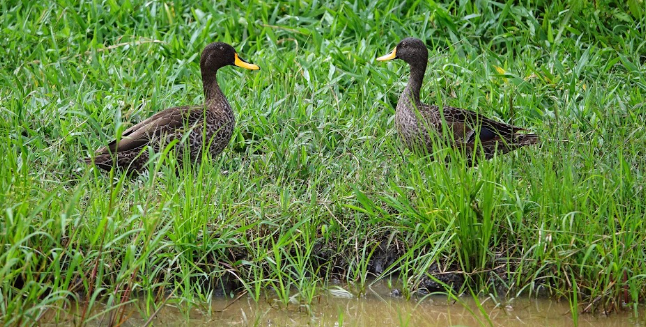
Although famous for mountain gorillas, Bwindi is equally celebrated as one of Africa’s finest birding destinations.
The ancient montane forest supports over 350 recorded bird species, including more than twenty Albertine Rift endemics. Guided bird walks along specialized trails allow visitors to encounter colorful turacos, broadbills, sunbirds, barbets, and forest robins.
Birding can easily be combined with gorilla trekking, creating an unforgettable wildlife experience.
Uganda’s largest national park offers remarkable habitat diversity, including savannah, riverine woodland, wetlands, and forests.
More than 450 bird species have been recorded here. The Nile River attracts African Fish Eagles, Goliath Herons, Kingfishers, Bee-eaters, and numerous waterbirds, while the Nile Delta provides excellent opportunities to search for the Shoebill Stork.
With over 600 bird species recorded, Queen Elizabeth National Park ranks among the richest birding destinations in East Africa.
The Kazinga Channel alone hosts extraordinary concentrations of pelicans, cormorants, herons, storks, kingfishers, jacanas, and fish eagles. Savannah grasslands support bustards, lapwings, and raptors, while nearby forests add even greater diversity.
Known primarily for chimpanzees, Kibale Forest is also a premier destination for forest birding.
Over 370 bird species inhabit its lush canopy, including Green-breasted Pittas, Great Blue Turacos, African Pittas during migration, hornbills, and numerous colorful forest specialists.
Located just outside Entebbe, Mabamba Swamp is internationally recognized as Uganda’s premier Shoebill destination.
Exploring the wetland by canoe allows birders to quietly approach the papyrus channels where Shoebills feed, while also observing kingfishers, weavers, jacanas, papyrus gonoleks, and swamp flycatchers.
Lake Mburo National Park offers exceptional birding opportunities within open woodland and wetland habitats.
Species commonly observed include African Finfoot, Red-faced Barbet, Papyrus Yellow Warbler, Brown-chested Lapwing, and numerous raptors. The park’s accessibility makes it an excellent stop during southwestern Uganda safaris.
Uganda offers rewarding birding throughout the year due to its equatorial climate.
The dry seasons, from December to February and June to August, provide easier hiking conditions and improved visibility in forests and grasslands.
The wetter months, particularly from March to May and September to November, offer abundant food resources, vibrant breeding plumage, active bird behavior, and the arrival of migratory species from Europe and northern Africa.
Serious birders often consider these rainy periods the most productive despite occasional showers.
Preparation greatly enhances the overall birding experience. Wearing neutral-colored clothing helps minimize disturbance to wildlife while sturdy waterproof hiking boots provide comfort on forest trails.
Quality binoculars are essential, and photographers should carry telephoto lenses to capture distant species without causing disturbance. Hiring experienced local bird guides dramatically increases the chances of finding rare and elusive birds because they recognize bird calls, seasonal movements, and preferred habitats.
Patience remains one of the most valuable qualities during any bird watching safari, as many of Uganda’s most sought-after species reveal themselves only after careful observation and quiet waiting. Starting excursions early in the morning is equally important since bird activity reaches its peak shortly after sunrise.
One of Uganda’s greatest strengths is the ability to combine birding with other remarkable wildlife experiences.
Many visitors design itineraries that include mountain gorilla trekking in Bwindi, chimpanzee tracking in Kibale Forest, game drives across Queen Elizabeth and Murchison Falls National Parks, boat cruises along the Kazinga Channel and the Nile River, community cultural experiences, nature walks, and scenic hikes through the Rwenzori Mountains.
This combination creates a rich safari experience that appeals to photographers, families, adventure travelers, and dedicated wildlife enthusiasts alike.

Uganda’s birdlife depends on healthy forests, wetlands, rivers, and grasslands. Many organizations work tirelessly to conserve these habitats while promoting sustainable tourism that directly benefits local communities.
Visitors contribute to conservation by respecting wildlife, remaining on designated trails, avoiding excessive playback of bird calls, maintaining appropriate distances from nesting birds, and supporting eco-friendly tour operators that invest in habitat protection.
Responsible tourism ensures future generations will continue to enjoy Uganda’s extraordinary avian diversity.
In conclusion, A bird watching safari in Uganda offers an unparalleled opportunity to discover one of Africa’s richest birding destinations. From the iconic Shoebill Stork hidden among papyrus swamps to the dazzling Green-breasted Pitta deep within tropical forests, Uganda presents remarkable encounters for bird enthusiasts of every experience level.
Talk to the experts from Haven Expeditions with exceptional biodiversity, world-class national parks, knowledgeable guides, and the chance to combine birding with gorilla trekking and classic wildlife safaris.

Ready to explore the wild beauty of Africa? Tell us your travel interests below and our safari experts will respond to provided email within 2 minutes & absolutely free.


